- Home
- Cisco Meraki MS Switches
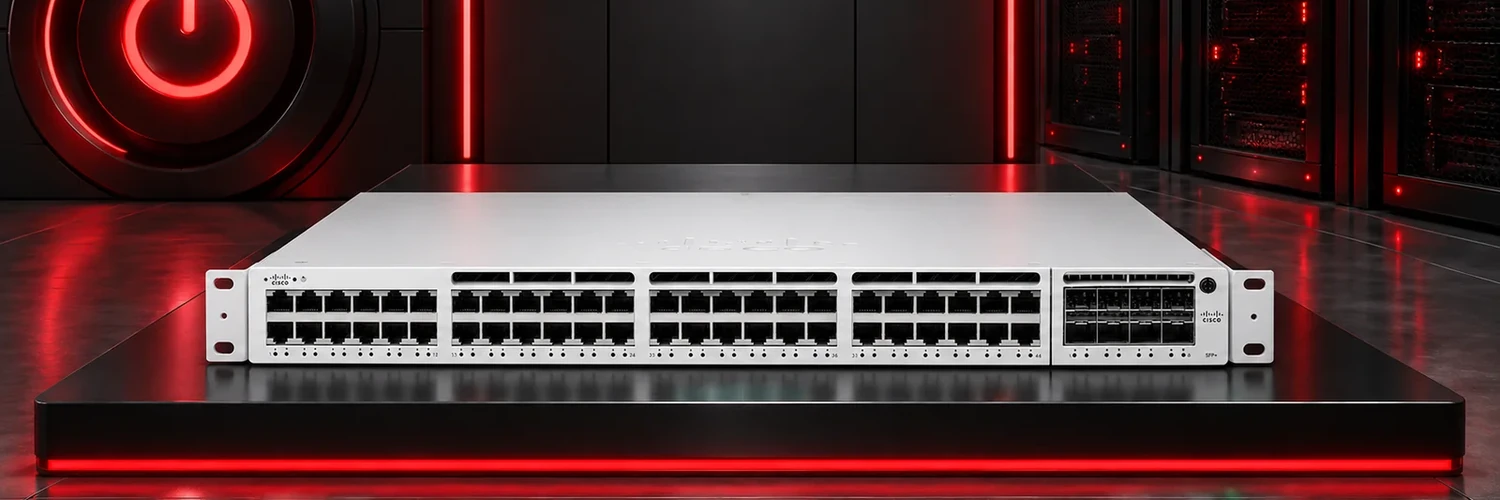
The Cisco Meraki MS Switches provide a cloud-managed switching platform designed to simplify enterprise network deployment, configuration, monitoring, and management.
With Layer 2 and Layer 3 switching options, different port configurations, and both stacking and non-stacking models, the Meraki MS family provides organizations with the flexibility required to build and manage networks across different business environments.
Cloud-Managed Switching
Cisco Meraki MS switches are designed around cloud-based network management.
Instead of relying entirely on traditional device-by-device configuration, administrators can manage the switching environment through a centralized graphical interface.
This approach simplifies many day-to-day network management tasks and provides greater visibility across the switching infrastructure.
Centralized Network Management
The Meraki cloud-managed architecture provides a centralized environment for monitoring and managing switches.
Network administrators can use the graphical management interface to simplify configuration and gain visibility into connected devices and network activity.
This centralized approach is particularly useful for organizations operating multiple switches or distributed network environments.
Layer 2 and Layer 3 Switching
The Cisco Meraki MS family includes both:
- Layer 2 switching models
- Layer 3 switching models
This allows organizations to choose the appropriate switch based on the design and routing requirements of their network.
Different models within the MS family provide different levels of switching and routing functionality.
Flexible Port Configurations
Cisco Meraki MS switches are available with different port densities to meet different network requirements.
Depending on the selected model, the series supports:
- Different Ethernet port configurations
- Up to 48 switch ports
- Multiple connectivity options
This allows businesses to select a switch based on the number of users, devices, access points, IP phones, cameras, and other network-connected equipment that need to be supported.
Stacking Options
The Cisco Meraki MS family includes:
- Stackable switch models
- Non-stacking switch models
Stacking provides additional flexibility for organizations that need to combine multiple switches and manage them as part of a larger switching environment.
The appropriate configuration depends on the selected MS model and network requirements.
Simplified Configuration
One of the main characteristics of Cisco Meraki MS switches is their GUI-based configuration.
The cloud management interface helps simplify tasks such as:
- Switch configuration
- Port management
- Network monitoring
- Device visibility
- Network troubleshooting
This reduces the complexity involved in managing switching infrastructure across different locations.
Network Visibility
Cisco Meraki MS switches provide administrators with centralized visibility into the network.
The cloud-based management platform can help IT teams understand how switches, ports, and connected devices are operating from a single management environment.
This visibility can simplify troubleshooting and make it easier to identify network issues.
Scalable Switching for Business Networks
The Cisco Meraki MS portfolio provides switching options for different network sizes and requirements.
With Layer 2 and Layer 3 models, different port densities, and stacking capabilities, businesses can choose the switch configuration that best matches their existing infrastructure and future network requirements.
Cisco Meraki MS Switching
The Cisco Meraki MS Switches combine cloud-based management with flexible switching options in a platform designed to simplify enterprise network operations.
Through centralized GUI-based configuration, Layer 2 and Layer 3 switching options, different port configurations, and support for both stacking and non-stacking deployments, the Meraki MS family provides a flexible approach to building and managing modern network infrastructure.
Tag Here:
Related Blogs